
15 Amazing Queen Bee Facts: Identification, Role & Lifespan Guide
The Queen Bee is the heart, soul, and mother of the colony. While she is the most important member of the hive, she is also the most misunderstood.
Is she really the "boss"? Does she actually sting?
Here is your ultimate guide to the Queen, starting with the quick facts you need to know.
Top 15 Mind-Blowing Queen Bee Facts (At a Glance)
If you only have a minute, here are the essential stats regarding the hive mother.
-
She is not the boss: The queen does not give orders; she serves the colony by laying eggs. The worker bees make the decisions.
-
She survives on Royal Jelly: While workers eat honey and pollen, the queen eats Royal Jelly her entire life.
-
Massive egg production: In peak season, she lays up to 2,000 eggs per day, more than her own body weight.
-
She creates her own replacement: When she ages, her pheromones drop, signaling the workers to raise a new queen.
-
A smooth stinger: Unlike workers who have barbed stingers and die after stinging, a queen has a smooth stinger and can sting multiple times without dying.
-
She only stings royalty: She rarely stings humans; she reserves her stinger for fighting rival queens to the death.
-
Longest lifespan: Queens live 2–5 years, whereas summer workers only live about 6 weeks.
-
Fastest development: A queen develops from egg to adult in just 16 days (workers take 21).
-
The "Piping" battle cry: Newly emerged queens make a chirping sound called "piping" to find and kill rival sisters.
-
One mating flight: She usually leaves the hive only once to mate, storing enough sperm to last her entire life.
-
Sex determination: She decides the gender of her offspring: fertilized eggs become females (workers/queens), unfertilized eggs become males (drones).
-
No pollen baskets: She cannot forage for food; she is fed by attendants.
-
Chemical control: She keeps the hive united using "Queen Mandibular Pheromone."
-
Genetically identical: There is no genetic difference between a queen and a worker; the only difference is diet (nutrition).
-
Darkness dweller: Aside from her mating flight and swarming, she spends her whole life in total darkness.


Identification: What Does a Queen Bee Look Like?

Spotting the queen among 40,000 workers is a skill. Here is how to identify her:
-
Size: She is the largest bee in the colony (15–20mm).
-
Shape: Look for a long, tapered abdomen that extends well past her wings. She looks more "elegant" and elongated than the stout worker bees.
-
Movement: She moves differently—often purposefully walking across the comb while workers move out of her way (creating a "retinue").
-
The Legs: She splays her legs slightly differently to measure cell sizes for egg laying.
Can a Queen Bee Sting You?
Yes, but it is highly unlikely.
The queen's stinger is strictly a weapon of war against other queens. Because her stinger is smooth (lacking the large barbs of a worker bee), she does not lose it when she stings. However, because she is so valuable to the colony, she almost never risks using it on a human or predator.
The Role: What Does the Queen Actually Do?
The Egg-Laying Machine
The queen's primary job is reproduction. She is the mother of every bee in the hive.
-
Daily Output: Up to 2,000 eggs/day in spring/summer.
-
Annual Output: Over 200,000 eggs per year.
-
Precision: She inspects each cell with her front legs before depositing a single egg.
The Chemical Leader (Pheromones)
The queen produces a "chemical perfume" called Queen Mandibular Pheromone. This scent is passed from bee to bee and tells the colony:
-
"Mother is alive and well."
-
"Do not raise a replacement queen."
-
"Work typically and remain calm."
When a queen gets old, this scent fades. The workers smell the drop in pheromones and immediately begin building Queen Cells to supersede (replace) her.

How Are Queen Bees Made? (Nature's Strict Diet)
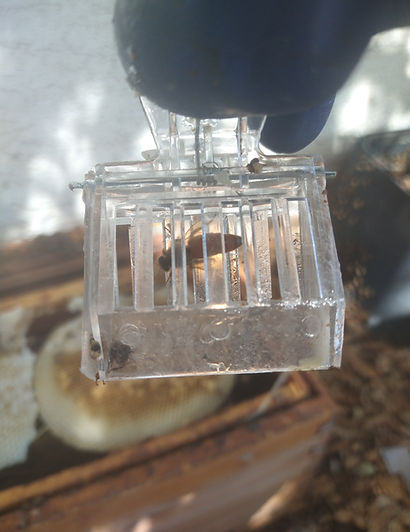
Ideally, a colony only raises a new queen for three reasons:
-
Swarming: The colony is too big and splits in half.
-
Supersedure: The old queen is failing.
-
Emergency: The queen has died unexpectedly.
The Royal Jelly Factor
Surprisingly, a Queen Bee and a Worker Bee start as genetically identical eggs. The difference is purely nutritional.
-
Worker Diet: Fed Royal Jelly for a few days, then switched to "bee bread" (honey/pollen).
-
Queen Diet: Fed exclusively Royal Jelly (a protein-rich secretion from nurse bees) for her entire larval stage.
This "superfood" triggers the development of ovaries and reproductive organs, turning a regular female egg into a Queen.
The Nuptial Flight: Mating & Reproduction
A queen does not mate inside the hive. When she is 7–10 days old, she takes her "Maiden Flight."
-
The Process: She flies to a "Drone Congregation Area" and mates with 15–20 male drones in mid-air.
-
Sperm Storage: She stores the sperm in a special organ called a spermatheca.
-
One and Done: She typically never mates again. That single flight provides enough genetic material to fertilize eggs for 3 to 5 years.
Choosing the Sex of the Baby
The queen has a superpower: she chooses the gender of every egg she lays.
-
Female (Worker/Queen): She releases sperm to fertilize the egg.
-
Male (Drone): She withholds sperm, laying an unfertilized egg.
.jpg)
Lifespan: How Long Do Queens Live?

A healthy queen can live 2 to 5 years. Compare this to a worker bee, who literally works herself to death in just 6 weeks during the summer.
Field Notes: Queen Longevity in Las Vegas
At Vegas Bees, we have noticed a trend specific to our desert climate.
Because Las Vegas has such long, warm seasons, our queens don't get the same "winter break" that queens in colder climates get.
They lay eggs for more months of the year. This intense workload can sometimes shorten a desert queen's prime productive years, leading to more frequent supersedures.
FAQ: Common Questions About Queen Bees
Is the Queen Bee the boss?
No. This is the biggest myth in beekeeping. The workers make the collective decisions (hive mind). If the queen underperforms, the workers will replace her. She is a servant to the colony's survival.
What happens if the queen dies?
The colony enters "emergency mode." Within hours, workers identify young larvae (under 3 days old) and flood their cells with Royal Jelly to create a new emergency queen.
How many queens are in a hive?
Typically, there is only one mated queen. If a second queen emerges, they will fight to the death until only one remains.
Why do queen bees pipe?
"Piping" is a war cry. When a new queen hatches, she makes a high-pitched tooting sound. This challenges other unborn queens. If they quack back from their cells, she locates them and stings them through the wax wall to eliminate the competition.
.jpg)